Sanket’s Journey
Background
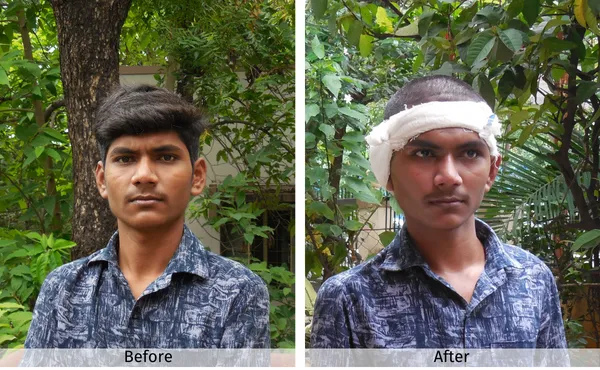
Sanket Suryawanshi, a 20-year-old from Village Kalandi, Latur, faced a life-altering challenge when he lost his hearing ability due to a viral fever at the age of 15. Originally born with normal hearing and speech capabilities, Sanket then diagnosed as bilateral severe to profound sensorineural hearing loss. The recommended solution was a cochlear implant to help restore his hearing and enable him to engage fully with society.
The Challenge
The total estimated cost for the implant, surgery, and post-surgery rehabilitation for one ear was Rs. 6.80 lakhs. The funding sources were as follows:
- Parents’ Contribution: Rs. 2.00 lakhs
- Mukul Madhav Foundation, Pune: Rs. 1.00 lakhs
This left a funding gap of Rs. 3.80 lakhs that needed to be covered.
The Support
The Make My Dream Foundation intervened to bridge the funding gap:
- Make My Dream Foundation’s Contribution: Raised Rs. 2.80 lakhs.
- Hospital Donation: The hospital gave a discount of Rs. 1.00 lakh.
The Procedure
The surgery was successfully performed in July 2021 at Pune. Post surgery, Sanket was provided with an external sound processor for his operated ear.
The Outcome
- Sanket’s cochlear implant has significantly regained his ability to hear.
- He underwent rehabilitation to maximize the benefits of the implant.
- With his hearing restored, Sanket has successfully completed his ITI education.
- Sanket is doing a job in an electric shop, demonstrating his successful reintegration into the workforce.
The Impact
Sanket’s journey underscores the transformative impact of timely and compassionate support in overcoming significant challenges. Make My Dream Foundation’s support has played a vital role in transforming Sanket’s life, helping him overcome his hearing loss and integrate back into society.
Utkarsh’s Journey
Background
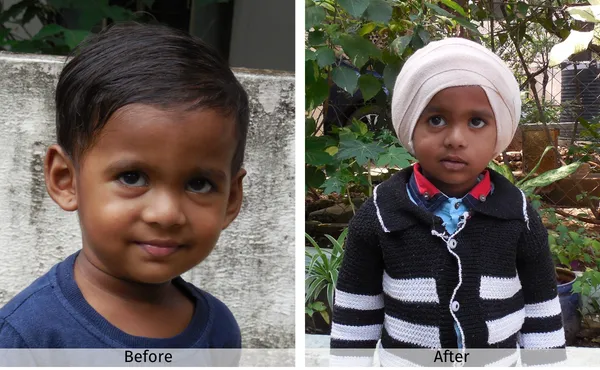
Master Utkarsh Manoj Kurne, a 2.6-year-old boy from Nashik, faced a significant challenge when he was diagnosed with bilateral profound sensorineural hearing loss since birth. His doctors recommended cochlear implants for both ears to help him regain hearing and facilitate his development.
The Challenge
The total estimated cost for the implants, surgery, and post-surgery rehabilitation was Rs. 14.78 lakhs. The breakdown of financial support was as follows:
- Government Aid: Rs. 4.68 lakhs
- Mukul Madhav Foundation, Pune: Rs. 0.70 lakhs
- Ekam Foundation, Mumbai: Rs. 1.00 lakh
- Parents’ Contribution: Rs. 1.50 lakhs
This left a funding gap of Rs. 6.90 lacs that needed to be covered.
The Support
The Make My Dream Foundation took crucial steps to address the funding shortfall:
- Make My Dream Foundation’s Contribution: Raised Rs. 6.90 lakhs
The Procedure
The surgery was performed in January 2022 at Pune. Post surgery, Utkarsh received external sound processors for both ears.
The Outcome
- Utkarsh has begun to hear and is in the process of rehabilitation.
- He is developing his speech and language skills at a good pace.
- With ongoing support, he is expected to achieve near-normal speech and language development and will be prepared to integrate into a regular school for formal education.
The Impact
Make My Dream Foundation’s contributions have been instrumental in transforming Utkarsh’s life, giving him the opportunity to overcome his hearing loss and thrive in a mainstream educational environment.
Mohsin’s Journey
Background
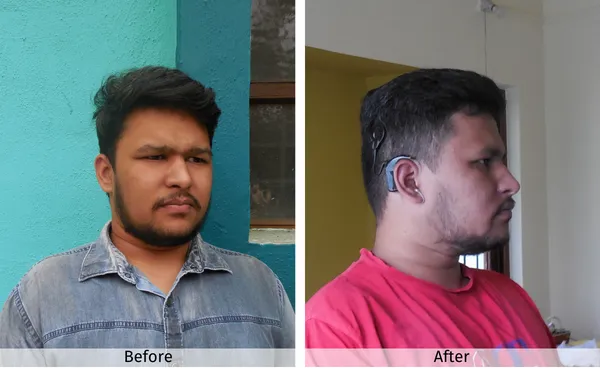
Mohsin Shaikh, a 20-year-old from Pune, experienced a significant shift in his hearing ability. Born with normal hearing in his right ear and profound hearing loss in his left ear, Mohsin's hearing deteriorated further at the age of 18 due to a viral infection. Despite using powerful hearing aids his hearing continued to decline, impacting his ability to pursue his Diploma in Animation. His doctors recommended a cochlear implant for right ear to help him regain hearing, preserve speaking ability and facilitate his development.
The Challenge
The total cost for the implant, surgery, and post-surgery rehabilitation was estimated at Rs. 8.00 lakhs. Funding sources were as follows:
- Parents’ Contribution: Rs. 5.75 lakhs.
This left a shortfall of Rs. 2.25 lakhs, which needed to be covered.
The Support
The Make My Dream Foundation stepped in to help bridge the gap:
- Make My Dream Foundation’s Contribution: Raised Rs. 2.25 lakhs.
The Procedure
The surgery was performed in February 2023 at Nasik. Mohsin was fitted with a Nucleus TSE Sound Processor and Nucleus Profile Slim ST Electrode (C1522) for his right ear.
The Outcome
- With the new cochlear implant, Mohsin has begun to hear again.
- He has resumed his Diploma course in Animation.
- His rehabilitation is ongoing, and he is expected to regain near-normal hearing and speech abilities.
The Impact
Make My Dream Foundation’s contributions have been instrumental in transforming Mohsin’s life, giving him the opportunity to overcome his hearing loss and remain a part of the mainstream educational environment. Make My Dream Foundation’s support has played a vital role in transforming Mohsin’s life.
Jiya’s Journey
Background
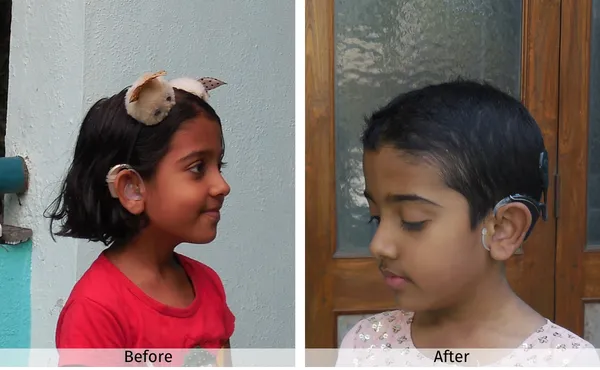
Miss Jiya Shaikh, an 8-year-old girl from Pune, experienced a severe viral fever at 1.5 years old, which led to profound hearing loss in both ears. Despite the use of a powerful Phonak hearing aid, Jiya's hearing did not improve. She has been transferred to "Unique International School" in 2021. Despite her efforts, her hearing loss significantly affected her academic performance and speech development. The Cochlear Nucleus CI422 Implant with Nucleus 7S Sound Processor has been recommended by the doctor.
The Challenge
The total cost of the implant, surgery, and post-surgery rehabilitation, involved was Rs. 8 lakhs. Funding sources were as follows:
- TATA Trust‘s Contribution: Rs. 5 lakhs.
- Parents’ Contribution: Rs. 1.85 lakhs.
This left a shortfall of Rs. 1.70 lakhs, which needed to be covered.
The Support
The Make My Dream Foundation stepped in to help bridge the gap:
- Make My Dream Foundation’s Contribution: Raised Rs. 1.70 lakhs.
The Procedure
The surgery was successfully conducted in January 2024 at Nasik. Jiya received a sound processor for her right ear, and the initial outcomes were promising, as she began perceiving sounds immediately after the procedure.
The Outcome
- Jiya’s cochlear implant has significantly improved her hearing abilities.
- She successfully reintegrated into mainstream education and resumed her schooling with renewed enthusiasm.
- She is adapting well to her enhanced hearing capabilities.
- The cochlear implant and subsequent rehabilitation are paving the way for a brighter future for Jiya.
The Impact
Make My Dream Foundation’s unwavering support has enabled Jiya to access essential medical care and support timely, helping her to overcome the challenges of hearing loss and embrace new opportunities for growth and development. Make My Dream Foundation has been instrumental and played a crucial role in transforming Jiya's life and making a positive difference.
Saksham’s Journey
Background
Master Saksham Chougule, a 2.5-year-old boy from Pune, has suffered with bilateral profound sensorineural hearing loss since birth. Early intervention was crucial, and his doctors recommended cochlear implants for both ears to enable him to develop language skills and integrate into mainstream education.
Master Saksham Chougule, a 2.5-year-old boy from Pune, has suffered with bilateral profound sensorineural hearing loss since birth. Early intervention was crucial, and his doctors recommended cochlear implants for both ears to enable him to develop language skills and integrate into mainstream education.
The Challenge
The total estimated cost for the cochlear implants, surgery, and post-surgery rehabilitation was Rs. 12.83 lakhs. The breakdown of funding sources was as follows:
This left a gap of Rs. 2.43 lakhs that needed to be covered.
The Support
The Make My Dream Foundation stepped in to assist with the following:
The Procedure
The surgery was successfully performed in March 2020 at Pune. Post surgery, Saksham was fitted with external sound processors for both ears.
The Outcome
The Impact
Saksham’s journey underscores the transformative impact of timely and compassionate support in overcoming significant challenges. He was admitted in 1st grade in regular English medium school under inclusive education. Make My Dream Foundation has been instrumental in his progress and integrated education.